




Lithium-Ion
Li-NMC

Custom Lithium-Ion
Battery Pack Manufacturer

Lithium-ion (NMC) technology stands out from other rechargeable lithium technologies due to its high energy density. Li-ion is particularly suitable for projects subject to constraints in terms of weight, size and performance.

At Enix Power Solutions, the design of a custom Lithium-ion battery pack is based on an analysis of your specifications. Our design team takes into account the electrical, electrochemical, mechanical and thermal parameters specific to each application.

Are you looking for a technical partner to develop your custom battery pack? Our design office can analyse your specifications.

Why Choose
Enix Power Solutions

For this Technology?

Custom lithium-ion battery packs

Enix Power Solutions has 30 years’ expertise in the integration of batteries, rechargeable cells and management electronics. As a Lithium-ion battery pack manufacturer, EPS selects each component according to the project’s requirements. We do not build a solution using off-the-shelf components or existing designs.

For each project, we select the components best suited to your specifications: the format and characteristics of the cells, electrical architecture, management electronics, protection circuits, mechanical integration, connectors and the charging method.

Our engineers select the battery format according to the project’s requirements:

Our design office also analyses the specific characteristics of each cell: behaviour during charging and discharging, internal resistance, dispersion, temperature and ageing.

Please consult us as early as the preliminary design stage to help you define your technical choices.

When should this
technology be used?

Li-NMC technology is suitable for projects where energy density is a key priority. In particular, it is well-suited to applications subject to volume or weight constraints.

We recommend the use of Lithium-ion (NMC) in the following sectors:

A Rigorous Approach


We approve the use of Li-ion only after a detailed analysis of your specifications. If your specifications change, we will adjust our technical recommendation accordingly.

The Mistake to Avoid

Sticking to a single cell technology at the start of a project. Analysis of your actual requirements should guide the choice of chemistry and cell format, not the other way round.

Advantages

of Li-NMC technology

The characteristics of Lithium-Ion NMC batteries
must be considered in the context of the application’s constraints.

Limitations
and key issues to be aware of

The battery pack must be designed in parallel with the end equipment.

There are several constraints that the customer must take into account:

USE CASE

Development of a Custom Lithium-ion Battery
for Underwater Environmental
Data Acquisition Equipment

Custom lithium-ion battery manufacturer for underwater equipment

Client context 

Our client had developed an underwater data acquisition platform for measuring water temperature and various other parameters, designed to monitor the impact of climate change on intermediate and deep-water zones. This equipment could be submerged to a depth of up to 600 metres. Once submerged, it could take measurements every 15 minutes and transmit them to the surface over a period of three months.

Technical constraints of the project

  • Significantly reduced available space
  • How does the pressure at a depth of 600 metres affect the behaviour of the batteries?
  • High reliability in a hard-to-access underwater environment.
Custom lithium-ion battery manufacturer for underwater equipment
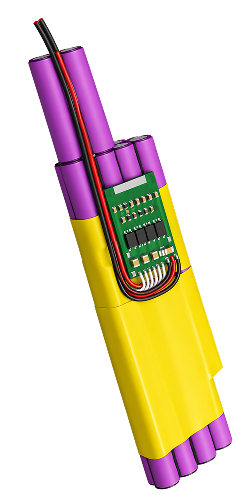
Custom lithium-ion battery pack manufactured by Enix Power Solutions

As we had very little information on how a lithium battery would perform at this depth, we began – in collaboration with our client – with a characterisation and validation phase, which enabled us to identify the most suitable battery model.

Electrical architecture
Rated voltage of 18V (5S5P) with a capacity of 17.5Ah
Cells used
18650-format Lithium-ion (NMC) cells
Integrated electronics
A 5S PCM to monitor voltage and current and protect the battery pack against malfunctions
  • The solution developed provided three months’ battery life under the anticipated operating conditions.
  • The custom battery pack was successfully integrated into the available space.
  • The Lithium-ion battery pack complied with the main regulatory and standards requirements: UN38.3, IEC62619, CE marking.

Planning a migration or a battery retrofit?

BMS for custom battery packs

BMS, PCM & associated

protection circuits

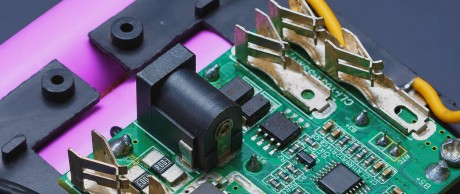
Lithium-ion (NMC) technology requires suitable battery management electronics and protective measures.
The main role of the BMS or PCM is to protect the user and ensure the safe operation of the battery pack.

Depending on the project, these devices provide:

  • voltage monitoring;
  • current measurement;
  • temperature control;
  • safety cut-offs;
  • cell balancing;
  • State of Charge (SOC) monitoring;
  • State of Health (SOH) monitoring;
  • communication with the equipment.

The integrated functions depend on the specifications. Protocols such as CAN, I2C, SMBus or others are evaluated according to the data required by the application.

Custom battery certification un38.3

Transport, certifications

& regulations

Placing equipment incorporating an Lithium-ion (NMC) battery on the market requires compliance with the regulations in force.
Each project includes an assessment of the requirements necessary for European…

or international marketing:

  • UN 38.3: tests required for the transport of lithium batteries.
  • IEC standards: safety standards selected according to the intended use, in particular IEC 62133 or IEC 62619.
  • UL 2054 or 1642: standards assessed according to the requirements for access to the North American market.
  • CE marking: requirements to be analysed for products placed on the European market.

The scope depends on the battery, the end application and the countries of destination.

Factors to consider
before choosing this technology

In order to validate the choice of Lithium-ion (NMC) and commence the technical study, several parameters in your specifications must be precisely defined:

Application

Battery function and equipment to be powered

Voltage & Capacity

Expected values for system operation

Current peaks (duration, frequency)

Intensity, duration and frequency. A discharge curve makes analysis easier.

Communication Protocol

Desired protocol, such as SMBus, I2C or CAN, and expected data, including SOC and SOH.

Dimensions & Integration

Dimensions, geometry, maximum weight and type of casing

Connector

Connector type, specifications and cable length

Charging mode

Recommended charger and charging conditions

Environment & Temperature

Usage conditions and temperature ranges

Transport and regulations

Destination countries, certifications and logistical constraints

Timeframes and volumes

Expected quantities for the prototype, the first production run and the annual volume

Economic objective

Target unit price for mass production

Other constraints

Any requirements specific to the application

Custom li-on battery manufacturer UK

Are you in search of a Custom Lithium-Ion Battery Pack Manufacturer?

Enix Power Solutions can provide you with comprehensive support in defining the architecture, integrating the BMS and manufacturing your custom battery solution.

FAQ

Lithium-ion (NMC) technology requires monitoring and protection functions. Depending on the project, a PCM or a BMS monitors voltages, currents and temperatures. It controls safety shutdowns. Balancing, communication and status monitoring functions depend on the specifications.

Before being transported, lithium batteries must have passed the UN 38.3 tests. The shipping requirements then depend on the mode of transport, the configuration of the battery pack, its state of charge, its packaging and the required documentation.

No. The number of cycles depends on the cells, the depth of discharge, the currents, the temperatures, the storage conditions and the operating environment.

EPS will investigate another battery technology. The choice depends on the application’s requirements, the environment, safety, current ratings, size and the target service life.

Lithium-ion (NMC) technology requires monitoring and protection functions. Depending on the project, a PCM or a BMS monitors voltages, currents and temperatures. It controls safety shutdowns. Balancing, communication and status monitoring functions depend on the specifications.

Before being transported, lithium batteries must have passed the UN 38.3 tests. The shipping requirements then depend on the mode of transport, the configuration of the battery pack, its state of charge, its packaging and the required documentation.

No. The number of cycles depends on the cells, the depth of discharge, the currents, the temperatures, the storage conditions and the operating environment

EPS will investigate another battery technology. The choice depends on the application’s requirements, the environment, safety, current ratings, size and the target service life.

OUR PARTNERS